Third-Round Reversal: The Snake Draft Twist That Changes Everything

The rule in one sentence
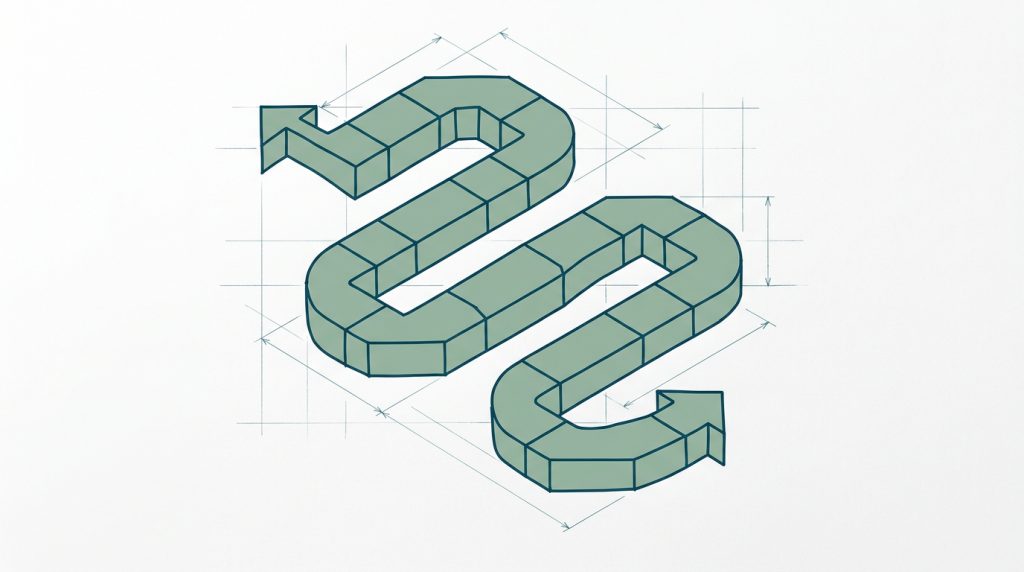
In a third-round reversal (3RR) draft, the third round runs in the same order as the second round, not the reverse.
That is the whole twist. It also changes a lot of the draft advice you have heard, and if your league uses 3RR and you draft like it is a normal snake, you are giving away an edge.
How a normal snake works
Twelve teams. Round 1 goes 1 through 12. Round 2 reverses, 12 down to 1. Round 3 flips again, 1 through 12.
The ends of the snake have the longest waits between picks. If you draft at 12, you get 12 and 13 back to back, then wait 22 selections. The middle seats get a smoother draft. Standard snake gives the turn teams back-to-back picks while also rewarding pick 1 with first crack at the best player on the board.
What 3RR changes
That turn advantage gets extended.
- Round 1 — 1 → 12
- Round 2 — 12 → 1
- Round 3 — 12 → 1
- Round 4 — 1 → 12
- Then the snake resumes as normal.
The result is that the team at pick 12 gets picks 12, 13, 24, and 25. Four premium selections inside a 25-pick window.
The team at pick 1 gets 1, 24, 25, and 48. One elite pick, then a long wait, then another turn.
3RR was invented to reduce the advantage of the top pick. It works. In some years, it can even overcorrect.
Why leagues use it
The idea is to keep the pick-1 seat from getting too much of an advantage simply because it had first access to the best player on the board.
3RR shifts some of that power toward the back of the first round. In years with elite talent at the very top, it can level the field noticeably. In years without a clear number one overall, it can even change which slot is best.
What it means for your draft
Early pick, 1 to 3
Your first pick is worth more than it is in a normal snake, and you pay for it with an ugly wait. Your next pick lands around 21 to 24 overall, and after that you do not pick again until 46 or later.
- Take the safest high-value player on the board in round 1. Volatility matters more when your anchor has to carry you through a long stretch without another premium pick.
- Assume the running back room gets hit hard before you pick again. Five teams pick between your first and second selection, and five more between your second and third. That is ten picks working against you.
- Consider a receiver-heavy middle. Receivers stay deeper for longer, so the position punishes you less for waiting.
Late pick, 10 to 12
You have one of the best seats in the room. Picks 12, 13, 24, and 25 give you roughly the value of drafting near the top of a normal snake, with more flexibility because they come in pairs.
- Draft complementary pieces at 12 and 13. Any positional combination is on the table. Build a foundation instead of forcing one archetype.
- Get an elite quarterback if you want one. Picks 24 and 25 are a strong spot for a top-five quarterback in superflex or a top-three option in a one-quarterback league.
- Do not reach. After pick 25, you wait until 48. The round 5 you are imagining will not have the same value you expect from a normal snake.
Middle pick, 5 to 8
3RR changes less for you than it does for anyone else. From round 4 on, the draft is a standard snake again, so your pick spacing goes back to what you are used to. The main change is the round 2 to round 3 turn, and from a middle seat that gap is only a pick or two different from normal.
What changes more is the board you inherit. The teams near pick 12 already used four premium selections inside a 25-pick window, so more early-round talent is gone by the time round 4 gets back to you.
- Prioritize the strongest available tier, not balance for its own sake. The top of the board gets picked over faster, so take the best value tier in front of you instead of filling a position just because your roster looks uneven.
- You can still start a positional run. From the middle, you are still in position to force the room to react. If the quarterback or tight end tier is about to break, take the player before the run starts.
- Re-map your picks, then draft normally. Write your pick numbers through round 6 and plan around the round 2 and round 3 turn. After that, your normal-snake instincts are fine.
Mapping your picks before draft night
Take two minutes and write down your actual pick numbers through round 6. Use the draft spot overlays on the matrix cheat sheet to help plan this out – make sure you turn on the third-round reversal setting.
Not rounds. Pick numbers.
If you are at slot 12 in a 12-team 3RR, your sequence is 12, 13, 24, 25, 48, 49, 72.
Then look at each pair and ask what two positions you want to leave that turn having addressed.
That exercise gives you most of the format edge.
The one mistake to avoid
Do not draft a 3RR room exactly the same way you would draft a normal snake.
The format only rewrites the early part of the draft. After round 4, it goes back to a normal snake with the usual back-to-back turns.
The mistake is treating 3RR like a completely different draft instead of a normal snake with a front-loaded change.
Where it really affects you is the early board. The bottom seats have already used four premium picks before round 4 starts, so the top tiers thin faster than your normal-snake instincts expect.
Adjust your round 4 through round 6 expectations down a tier. You do not need to throw out your entire draft approach.
Play the format, not the habit.
When 3RR wins leagues
The teams at picks 10 through 12 have a major advantage if the managers understands that four premium selections are coming quickly and treat them as a package instead of four unrelated decisions.
The team at pick 1 has the opposite problem. If the first selection misses, there is a long wait before the roster gets another chance to add premium talent.
Format awareness is a real edge.
Most of your league knows what 3RR is. Fewer people actually change the way they draft because of it.

Responses